Categorizing Every 2024 5e Spell Into What They Actually Do
The most fun and most frustrating activity I've done as a D&D nerd was organizing all 410 spells into a taxonomy that actually explains what spells do.
Published on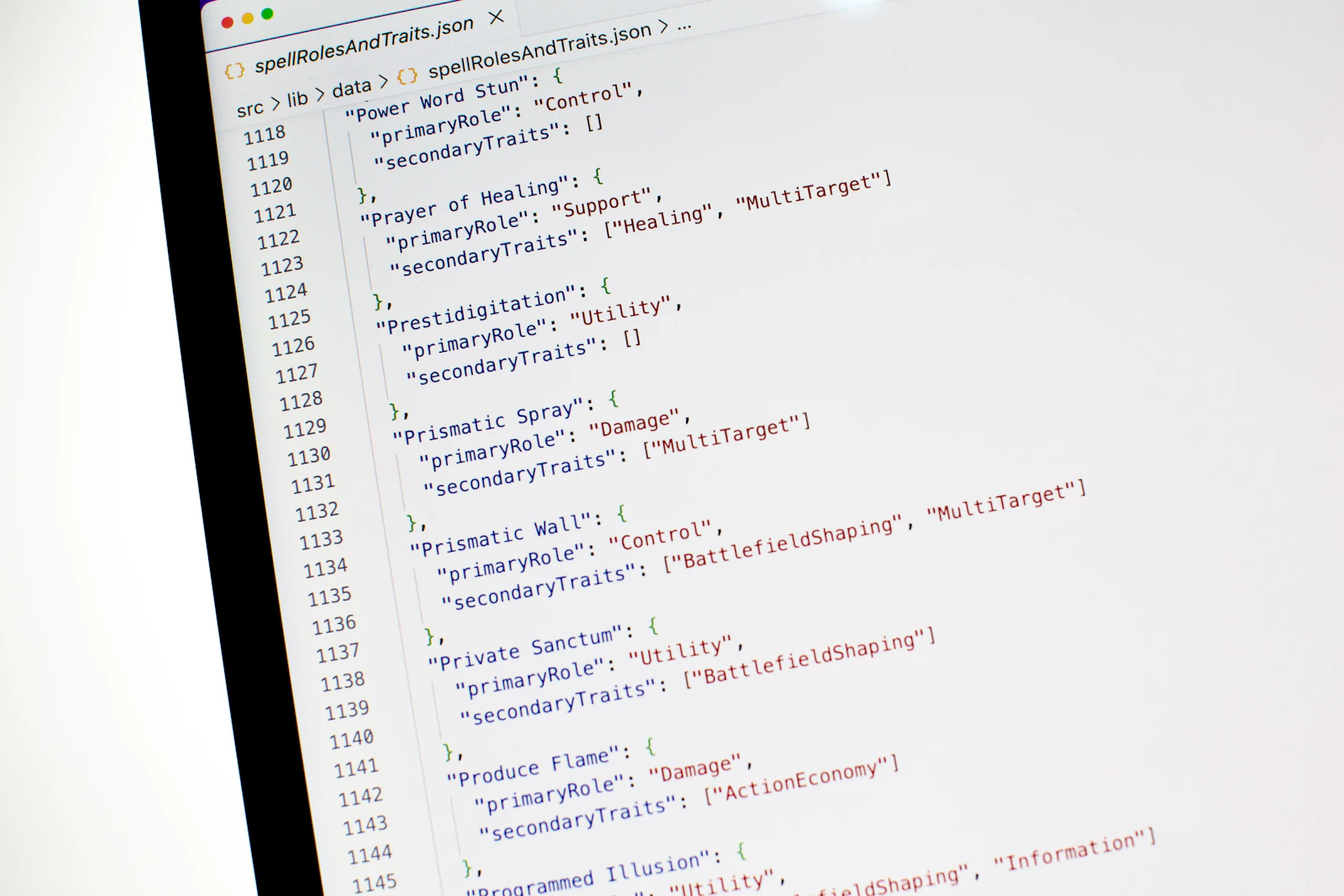
I've classified every 2024 5e spell in the game under a taxonomy that gives each spell a primary role and secondary traits. I was inspired to do this classification because I've been playing D&D for over six years and to this day I still find it very hard to discover spells I would like to use for my characters.
But why is that the case? Shouldn't I be able to quickly find interesting spells that match my play style? The 5e Player's Handbook already features plenty of categorization for 5e spells with information like Class, School of Magic, Concentration, Action type, etc.
But none of that actually says what the spell will do.
For example, spells categorized under the Necromancy school only signal that the spell is thematically related to death and decay in some fashion. Yes, within that school you will find the signature Necromancy spells you would expect to find, that do things like raise the dead, or deal necrotic damage. But buried within that same school are spells that allow for gaining hit points, putting creatures to sleep, or even travelling through the Astral Plane!
So while I have friends I'm jealous of who have had the time to review every single spell in the game to find some new favourites, I've been far more pressed for time and often lean on blogs for recommendations that match my play style rather than exhaustively analyze every single spell.
Unfortunately this leads to me to considering the same old popular spells over and over.
So instead of reading every single spell in the game the next time I roll a character, I thought it would be a better use of my time to build a system that actually explains what spells do, that could be sortable and searchable so you could do things like quickly find the single damage spell in the game also capable of summoning a creature, Finger of Death.
It was a ton of fun to build this out, and a massive undertaking. This is a story about how it got done and the decisions along the way.
Step 1: Create the classification system
First was taking a stab at creating a classification system, or taxonomy, for all 410 spells in the 2024 edition. I wanted two things:
- A primary role for the spell, spells would only have one
- Secondary traits for the spell that spanned across roles, spells could be tagged with many
I figured classifying spells at a high level into separate and distinct roles could work. For example, there are the spells in the game buff you and allies, these are spells that deal damage, etc. From there I would identify traits of spells that span roles. This would convey a lot of information about all the spells in a compact, easy-to-use way. It keeps the information architecture simple with no hierarchy. Normal players could understand this system: a spell has a role, and these are some traits it has.
But for all this to work, I needed to identify those high level roles that all spells could fit into.
Primary Spell Roles
This was my first attempt of making the roles:
- Damage - Make your enemies hurt
- Control - Make your enemies do things
- Support - Boost you and your allies
- Defense - Protect you and your allies
- Utility - Everything else
I felt great about these roles. Conceptually to me they felt mutually exclusive like I had hoped for. Yes, some spells can be used for defense and apply damage, but these spells still really have only one primary role. For example Fire Shield can do lot of damage, but it still mostly exists for defence. You have to be taking hits to get a secondary benefit of damage out of it. Forbiddance does damage too, but this is most certainly a Control spell.
So I carried on with the assumption that spells only have one primary role. And for 409 spells, that was true.
But then I came across Plant Growth. Plant Growth is two completely different spells that a game designer chose to combine into one under the shared theme of manipulating plants. This designer was not thinking of me when designing this spell, but I'm sure thinking of them.
Casting it as an action creates difficult terrain out of the nearby plants in an area. Great. Slowing down your enemies on the battlefield. That's a Control spell.
Casting it over an uninterrupted eight hours helps plants (in that same size of area) yield twice as much food when they're harvested over the course of a year, one time only. Well that's a very situtional spell for turning D&D into Stardew Valley. A Utility spell.
Plant Growth has a binary choice of how you use it. It's two different spells but a designer decided to have some fun, and because of that it truly has two primary roles. So I had to extend the system to allow for spells to technically have multiple roles. But only Plant Growth uses two roles. The exception that proves the rule.
Thanks, designer*.
*On a subsequent review of all spells, I tagged a couple more with multiple primary roles — later appreciating that some spells have a different role when applied to an enemy versus an ally. Take a spell like Polymorph for example: Control when hobbling an enemy, or Support when buffing up an ally. Both are equally important uses for the spell.
Secondary Spell Traits
Designing the secondary spell traits was fun. Instead of having to think of how spells were different than each other as I did with the roles, I could think about how spells that could be different in every way shared mechanical similarities.
I had two requirements for each trait I came up with:
- Make sure these traits were capable of matching spells from different roles, otherwise the trait would really just be a second, more specific level of the primary role and I didn't want that hierarchy.
- Make sure the trait wasn't so broadly defined as to be meaningless. I toyed with the idea of "Buff" and "Debuff" traits for spells, and at first glance it feels really compelling, but going deeper, it raised questions: When is a buff a buff? How is a buff different than the Support role?
This was my take out of the gate:
- Action Economy - Spells that give you more choices on future turns
- Battlefield Shaping - Spells that alter terrain, create obstacles, introduce hazards, and affect enemy positioning
- Healing — Spells that restore hit points and bring characters back to life
- Information — Spells that provide ways to transmit, perceive, detect, or reveal hidden or unknown information
- Mobility — Spells that augment or allow for new ways of moving
- Multi Target — Area of effect and other spells that target multiple allies or enemies
- Social Influence — Spells that allow for communication, persuasion, or influencing behavior
- Summoning - Spells that create new allies
I quickly added two more that I wanted to see after going through the spells:
- Retaliation - Spells that hurt or negatively impact attackers
- Save or Suck - Spells that fall entirely flat if the target makes a save.
I'm still excited to see if I can add new meaningful traits in the future to tie different spells together, but for now where I've landed has some breadth and feels useful.
Step 2: Programatically categorize the spells
Now with a proposed system in place, I had to categorize all 410 spells. Before embarking on a painstaking manual review of each one, I decided to try and automate the process. I wrote some scripts to parse spell descriptions and generate obvious signals about the spell's intentions and then punt that all up for AI language processing to determine the roles and traits automatically.
I am a programmer after all.
I knew a programatic approach wouldn't finish the job with the quality I was looking for, but I wanted to see just how close it got me. After running the scripts and quickly glancing at the results, AI did a pretty okay job and ctegorization was mostly reasonable.
Maybe more importantly, the AI results give me a quick baseline to scrutinize my classification system with. Without going to the lengths of categorizing every spell by hand, I could quickly check if my primary roles had a nice distribution of spells, which would help reinforce that what I came up with was useful. Yes, AI's first pass didn't categorize every spell correctly, but I could still trust that the overall distribution was within the ball park.
Here it was the number of spells in each role on a first pass:
- Damage: 129
- Utility: 99
- Control: 82
- Support: 52
- Defense: 48
I was pleased with that result. Damage spells being so well represented wasn't surprising as D&D is mostly a combat game. I liked that all of the groups had a substantial number of spells. It also helped me solve what I was realizing was my first struggle with my system: the line between Support and Defense.
Let's look again:
- Support - Boost you and your allies
- Defense - Protect you and your allies
So many boosts in D&D are also forms of protection. Bless quite literally enhances attacks and defenses at the same time. The initial numbers from AI helped give me my solution: combining Support and Defense into a single role. It removed what was too blurry a line, and also brought about a remarkable parity of spell numbers to each role.
- Damage: 129
- Support: 100
- Utility: 99
- Control: 82
This satisfied my brain greatly.
Getting back to the AI results, while a lot of categorization looked reasonable, probably 10% or so of the results suffered from some egregious errors typical of how a Large Language Model would get tripped up. Take Chill Touch as an example:
On a hit, the target takes 1d10 Necrotic damage, and it can't regain Hit Points until the end of your next turn.
This was tagged with the Healing trait. AI had overindexed on the mere mention of regaining Hit Points and thought this was a healing spell. There's also a real chance it might have started thinking of Vampiric Touch, which does grant hit points.
So, knowing output like that is not acceptable and was occuring more than never, I commited myself to going through all the spells manually to get things right.
I had mostly prepared myself for this outcome, and other than a bit of time, it should be easy. Right?
Step 3: Manually categorize spells
I began going through every spell, one by one, reviewing them against my taxonomy and making sure they were categorized correctly. Roles were mostly already accurate after my scripts, and with the role's clear definitions, were pretty straightforward to set.
There were examples I previously mentioned of spells that do things from multiple roles but truly have one main role, or the even rarer case of spells that have multiple roles equally, But there was only a handful of calls like that I had to make over 410 spells. Roles were locked.
The traits were, and still remain, more difficult to set. And as I reviewed spells, I tweaked my definitions to create clarity to help me continue categorizing.
And this is where I have to give AI maybe a bit of credit. Yes, it had some bad errors from truly misunderstanding some spell descriptions, but many of the misses in its categorization were the fact it wasn't able to tweak my definitions as it sorted spells. My definitions were ambigious, and only over iteration could I tighten them to something that made for less contradiction. AI didn't have that luxury.
Evolving definitions
Let's talk about Summoning. AI tagged a lot of things with Summoning.
Most of the Conjure spells (Conjure Animals, Conjure Celestial, Conjure Constructs, Conjure Elemental, Conjure Fey, Conjure Minor Elementals, Conjure Woodland Beings) appear to be spells that summon things. Well, technically conjuring things — but does that matter? Great question. I didn't think so, these are summoning spells — you're bringing things into being — whether it be through conjuration or physically creating something.
But even if you do the gynmastics I did to resolve those conjuring spells thematically as Summoning, look again at those spells. In the 2024 edition, the rules have been simplified, and you're not actually creating an ally — there's no actual creature being created with with a functioning stat block, challenge rating, or anything.
Mechanically these are no longer summoning spells. I revised my definition to emphasize that summoning creates allies. Allies with hit points, movement, etc. And these spells aint it.
Action Economy was another tough one.
This was one of the first traits I wanted to implement, as I love building Wizards that can do a lot of stuff within their casting. I thought it would be obvious what this meant, Action Economy spells give you more out of your turns.
Well, Reaction spells do that by virtue of being able to pull them in at a moment's notice. Bonus actions also add an extra choice to your turn. So I had all those spells included. But that's already dictated by their action type, so I removed all those and decided what I really wanted to find were spells that gave you more heft to your turns through other means.
But so many spells do that. Spells that buff your abilities make your actions go further and do more. So I had to really distill the idea down to something small and focused, and thought about spells in the game that give you more actions per round. But very few spells actually grant more actions. There's Haste, literally granting an extra action to yourself or an ally, and Simulacrum which is a copy of yourself to do all the things you like doing, and of course there's all the other actual Summoning spells that give you new allies to lead, and thus more turns every round. But that now felt like too narrow a scope.
I eventually settled on all spells that grant you more action and bonus action choices on future turns. So it includes what I just mentioned but also adds spells like Call Lightning — you have to hold your Concentration, but as long as you do, on future turns, with your action, you can cast down a lightning bolt from the sky, or choose to do something else. Your decision space gets bigger.
That's my Action Economy trait. For now. Though as I write this, the overlap between Summoning and Action Economy is starting to bug me. I'll have to think about that.
You can see how this was challenging.
Step 4: Revise in perpituity
This was a tough exercise. And I'll be honest, I tweaked and changed definitions so many times that I didn't always get back to every spell my changes have impacted. So some spells are still off from how I think they should be. I'll get around to them. Or I'll change my Action Economy definition again. Or I'll add new traits. Who knows.
But I know the spells are categorized well enough to be useful data for finding spells you may have previously skipped over, so I hope you enjoy it.
And of course, let me know if you spot a categorization you don't agree with, using the feedback link at the bottom of the page.